
Animal Facts
Snow Leopard: The Ghost of the Mountains and Its Fight for Survival
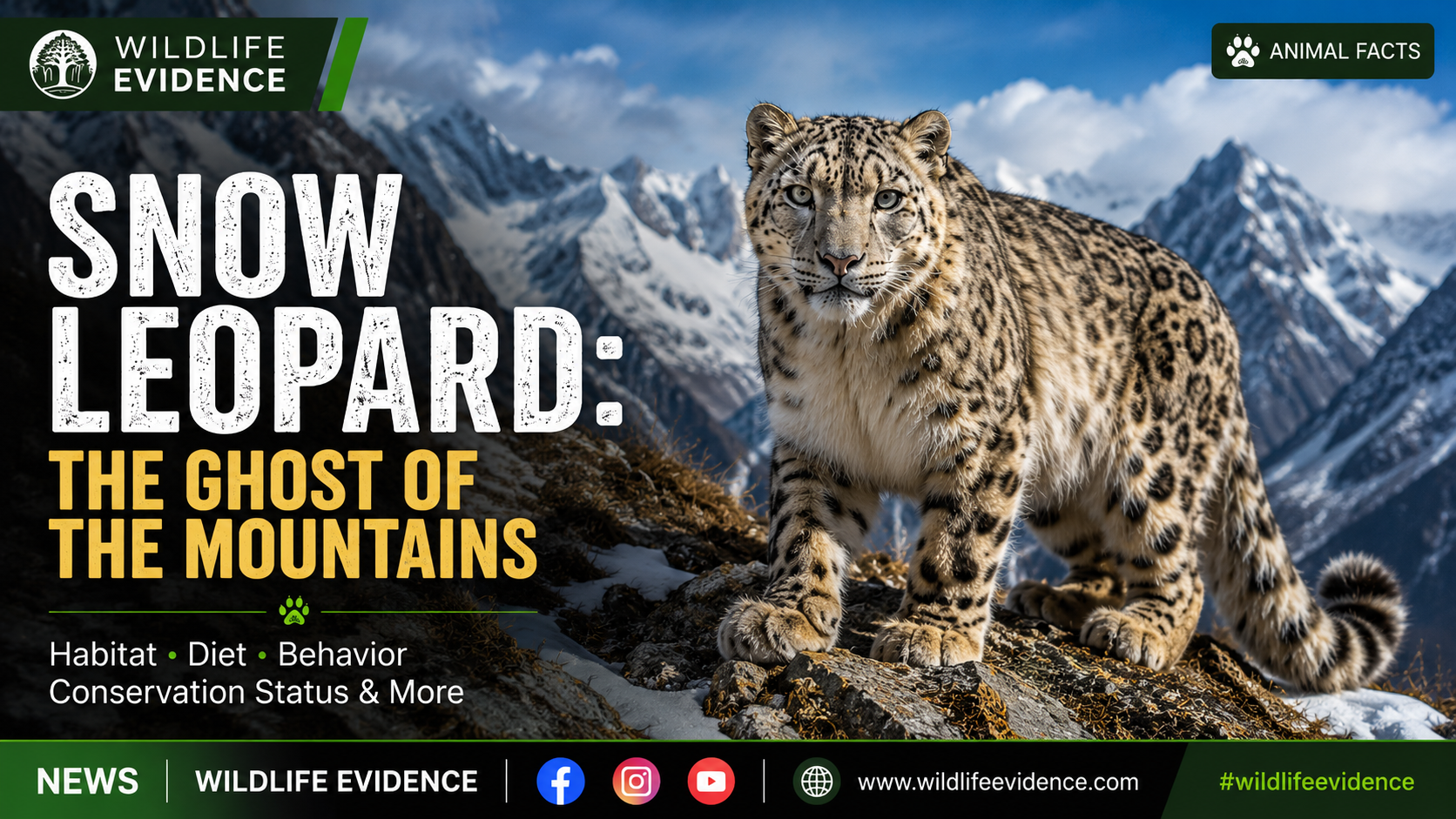
Snow Leopard: The Ghost of the Mountains
The snow leopard (Panthera uncia) is one of the world's most mysterious and beautiful big cats. Nicknamed the "Ghost of the Mountains," it is rarely seen in the wild due to its incredible camouflage and solitary lifestyle. Found high in the rugged mountains of Central and South Asia, the snow leopard plays a vital role in maintaining healthy mountain ecosystems.
Habitat
Snow leopards inhabit rocky mountain ranges at elevations between 3,000 and 5,500 meters. Their range includes countries such as India, Nepal, Bhutan, China, Mongolia, Pakistan, Kyrgyzstan, and Tajikistan. Thick fur, large paws, and a long tail help them survive freezing temperatures and snowy terrain.
Physical Characteristics
Adult snow leopards typically weigh between 25 and 55 kilograms, with males generally larger than females. Their smoky gray coat with black rosettes provides excellent camouflage against rocky cliffs and snow-covered landscapes. Their long tail helps maintain balance while climbing and also wraps around their body for warmth.
Diet
Snow leopards are carnivores. Their primary prey includes:
Blue sheep (Bharal)
Himalayan ibex
Argali sheep
Marmots
Hares
Small mammals and birds
When natural prey becomes scarce, they may occasionally hunt livestock, leading to conflicts with local communities.
Behavior
Snow leopards are solitary and highly territorial. They are most active during dawn and dusk. Unlike lions, they cannot roar because of differences in their vocal anatomy, but they communicate through scent marking, scratching rocks, and making chuffing sounds.
Reproduction
Female snow leopards usually give birth to 2–3 cubs after a gestation period of about 90–100 days. Cubs stay with their mother for nearly two years, learning essential hunting and survival skills before becoming independent.
Threats
Despite living in remote mountains, snow leopards face several threats:
Habitat loss
Climate change
Illegal poaching
Decline in wild prey
Human-wildlife conflict
These factors have reduced their population across many parts of their range.
Conservation Efforts
The snow leopard is classified as Vulnerable on the IUCN Red List. Governments, conservation organizations, and local communities are working together to protect habitats, reduce poaching, promote sustainable livestock practices, and educate communities about wildlife conservation.
Interesting Facts
Snow leopards can leap up to 15 meters in a single jump.
Their tails can be nearly as long as their bodies.
They cannot roar like lions or tigers.
Their thick fur keeps them warm in temperatures below −30°C.
Fewer than 7,000 snow leopards are believed to remain in the wild.
Conclusion
The snow leopard is one of nature's greatest mountain predators and an important symbol of healthy high-altitude ecosystems. Protecting this elusive cat helps preserve entire mountain landscapes and countless other species that share its habitat. Continued conservation efforts are essential to ensure that future generations can admire the legendary "Ghost of the Mountains."

0 Comments
Leave a Comment